Free Lease and Rental Agreements
Start building your Residential Lease Agreement for free. As you customize, you’ll see both Free and Pro options — choose the version that best protects your rental at the end. Download instantly as a PDF or eSign online. Includes state-specific legal protections.
Free Form - Create an account to access forms
4.8 Stars from landlords & property managers
Takes less than 5 minutes
Takes less than 5 minutes
Related Documents
Pro Tip: Before signing a Residential Lease Agreement, always complete a thorough Tenant Screening and Rental Application to ensure the Applicant is qualified and to reduce the risk of a bad outcome.
Lease Agreement
A Lease is a contract between a Landlord and Tenant that outlines the terms under which a Tenant rents property owned by the Landlord. It’s an essential document for Landlords because it’s legally binding and outlines the roles and responsibilities of both parties.
The Lease Agreement not only provides legal protection should any problems arise, but it also lays the foundation for the Landlord Tenant relationship.
When you give a Tenant keys to your property, you’re handing over legal possession. Before you do that, you need a comprehensive rental Lease Agreement in place that’s been signed by both parties.
Read on to learn more about residential Lease Agreement or start building the Lease Agreement that’s right for you.
Watch Our Playlist

Rated "Great" from over 5,000+ reviews on Trustpilot
Build My Lease
Lease Agreements by State and your State Laws
We Provide the Highest Quality Lease Available Online
You won’t find a better Lease Agreement online than the ezProLease.
- A Lease Agreement that leverages the expertise of thousands of Landlords
- Recommended by Shark Tank's Barbara Corcoran
- Over 3 million Leases created since 2006
- Rated "Great" from over 5,000+ reviews
We offer Landlords an easy way to create a comprehensive rental Lease Agreement that is state-specific and that is guaranteed to comply with all of THEIR state’s laws.
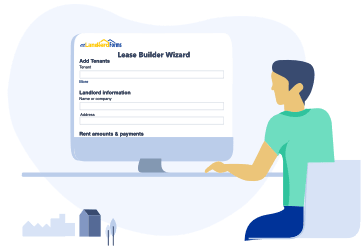
Our Lease Builder Wizard lets Landlords customize their Lease Agreement or rental agreement online. Plus, it gives State Assist tips throughout so Landlords know any specific information that they need to include. It’s not just a Lease Agreement template, it’s a dynamic and customizable document.
Here are just a few of the features that Landlords love about our ezProLease Agreement:
- Built entirely online with easy-to-follow prompts
- Automatically includes any terms required by your state
- Automatically includes any documents or disclosures required by your state
- Has an extensive list of terms and conditions that Landlords can select from
- Offers the opportunity to add custom text
- Everything is written in simple language that is easy to read
We make it easy to rent your property and to get the most out of your real estate investments!
Start Building Your Lease Agreement Now
Download and e-sign your Pro Lease
A Great Lease Agreement Makes a Great Landlord
Every Landlord needs a great Lease Agreement to define the terms of the relationship between the Landlord and Tenant and to provide protection when issues arise with residential property they rent. This video explains why the Lease Agreement is so important, what it should include, and how anyone can easily create a great one.
Pro Tip for First-Time Landlords that Want to Rent Out Real Estate:
Real estate can be a great investment and the role of Landlord can be a rewarding one. However, it also can involve lots of work and headaches. At ezLandlordForms, we help you eliminate the headaches and make it as easy as possible for you to get the most out of your real estate investments.
The first step is a great Lease Agreement. This means a Lease Agreement that includes more than just each month’s rent and the amount of the security deposit. Instead, every Landlord needs a Lease Agreement or rental contract that provides details on all aspects of the property and leaves no confusion about who does what.
Sounds complicated, but don’t worry - we’ve got you covered.
Lease Agreement Page Contents
- Understanding the Residential Lease
- Start Your Residential Lease Agreement
- The Lease Builder Wizard
- How the Lease-Building Process Works
- Why You Need a State Specific Lease
- What’s Included in the ezProLease and the Free Lease?
- Our Leases at a Glance
- ezSign
- ezCloudStorage
- What Should be included in a Complete Lease Package?
- What Are the Steps of the Leasing Process?
- Checklist - Are You Ready to Rent Your Property?
- Speaking of Checklists...Is There a Lease-Signing Checklist I Can Follow?
- Frequently Asked Questions
- Free Resources
- Related Forms
- Related Articles
Understanding the Residential Lease Agreement
A residential Lease can be confusing, especially for a new or inexperienced Landlord. With our Lease Builder Wizard, creating a Lease Agreement is easy and straightforward. We’ve done all of the hard work so you don’t have to.
But, our goal at ezLandlordForms is to give Landlords everything they need to get the most out of the property they rent and their real estate investments. This not only means the tools and forms they need but also the resources and educational content they want to understand every aspect of the process.
With that in mind, here’s a simple overview of the residential Lease Agreement to help make any Landlord - new or experienced - an expert. Plus, it’ll help make it easy to rent any residential property.
Other Terms You Might Hear for Lease Agreement
It can be frustrating to hear lots of different terms thrown around when you’re dealing with legal documents. Especially if they’re all essentially referring to the same thing.
To help make this less confusing, here’s a list of other terms that you might hear that all are referring to the Lease Agreement:
- Rental Lease Agreement
- Rental Contract
- Rental Agreement
- Rental Agreement Form
- Residential Rental Agreement
- Agreement Rental Form
- Lease Form
- Lease Agreement Form
- Apartment Lease
- Apartment Rental Agreement
- House Lease
- House Lease Agreement
- House Rental Agreement
It’s worth noting that generally, a rental agreement is for a number of days, often 30 days. In contrast, a Lease Agreement is for a longer period of time, usually 12 months.
That said, both the rental agreement and Lease are terms that refer to the contract that outlines the relationship between the Landlord and Tenant. The primary difference is the period of time of the agreement.
What Should be Included in a Lease Agreement?
A Lease is a contract between the Landlord and Tenant, and there are some basic terms that should be included in any standard Lease Agreement. These include:
- Names and contact information for all Tenants and the Landlord
- A description of the rental property
- The Lease term, which provides the minimum amount of time the Tenant will occupy the property and an end date for the Lease
- The monthly rent amount and the monthly rent due date
- Security deposit amount, which often is equal to one month’s rent amount
- Policies regarding when the security deposit is paid and how it’s held
- Where or how Tenant should make monthly rent payments
- When the Tenant owes a late fee for monthly rent that is not paid on the due date
- Policies regarding utilities and property maintenance
- What happens at the end of the Lease term
Beyond these basic terms, a more comprehensive Lease Agreement includes:
- State-specific terms and language
- State-required documents and disclosures
- Customized language dealing with the specifics of the property, including issues like pets, guests, subletting, parking, and trash and recycling
- Addenda to create a comprehensive Lease Package including things like a Welcome Letter, a Move In/Move Out Checklist, a Smoke-Free Property Addendum, and a Tenant Guest Policy.
While the specifics of your Lease may vary, it’s important to remember that any time you rent real estate, you need to have a comprehensive Lease!
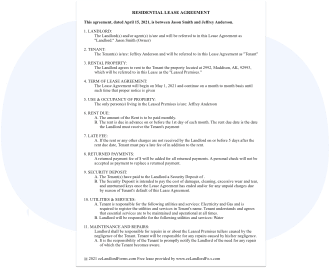
View a sample residential Lease to get a better understanding of exactly what this document should include.
Start Your Free Lease
When is a Lease Needed?
Any time you rent a property you need to have a Lease, or rental contract, in place. This is true whether you rent to a friend or family member or whether you rent to someone you don’t know.
The Lease outlines the responsibilities and the rights of both the Tenant and Landlord, and it’s absolutely necessary to protect both parties whenever real estate is rented. It provides written consent from both parties to comply with the terms of the rental agreement.
When something goes wrong with a rental property, it’s the Lease Agreement, and the written consent it provides, that protects the Landlord.
Unfortunately, there are a lot of things that can go wrong including:
- Tenant doesn’t pay one or more month’s rent amount by the due date
- Tenant only pays part of the month’s rent amount by the due date
- Tenant is consistently late with monthly rent payments
- The property is not taken care of
- Tenant violates the Lease Agreement
- There’s damage to the property beyond normal wear and tear
- The Tenant does not move out by the Lease end date
Sadly, a handshake or a security deposit is not enough to protect you when things go wrong with a property you rent. You need a thorough Lease Agreement, offering documentation and written consent, to ensure that you and your real estate are protected.
A good Lease will protect you by:
- providing the framework for how a Landlord or Tenant should address any problems with the property you rent out
- outlining all responsibilities and policies, covering everything from how a Landlord may deal with a late monthly rent payment or a missed monthly rent payment to when to initiate eviction proceedings
- making it easier for the Landlord to address any issues that arise, whether they be with rent not paid by the due date or another issue
When a Tenant violates a term of the rental Lease Agreement, the Landlord may terminate the Lease. However, it’s often in the Landlord's best interest to simply use the terms of the Lease to resolve the issue and to take steps to ensure that the Tenant complies with the Lease Agreement in the future
While you have other safety measures in place, like the security deposit and homeowners insurance, neither gives you the full protection that you need. It’s the Lease that makes sure that you can rest EZ knowing you and your residential property are protected.
Start Your Residential Lease Agreement
We offer two types of Leases, a free Lease Agreement and an ezProLease. Both are created online with our Lease Builder Wizard and offer ezStateAssist tips to make sure you know the applicable laws.
They are both completely built and customized online. This means that once your Lease is drafted, it’s ready for your Tenant to review and sign (no need for filling in blanks or writing in details).
Here’s a brief overview of what’s included in each of our Lease Agreement.
Free
This rental Lease Agreement is a simple, two-page Lease that anyone can create at any time. It’s easy to build and customize online. It’s built using our Lease Builder Wizard and includes the basic terms of a Lease Agreement, like rent amount, rent due date, rent late fees, security deposit, and the lease term.
Unlike some of our competitor’s Leases, this Lease Agreement is entirely completed online. You don’t have to print it out and then fill in blanks or write in information. You can fully customize it online, and then your printed Lease Agreement is ready for the Tenant to review and sign.
Some companies offer just a lease Agreement template that the Landlord may print out and fill in. It’s important to note that our Lease is much more than a basic lease Agreement template and instead is an interactive document that the Landlord may build and customize online.
This printable Lease can be created and printed for free. No credit card required.

The ezProLease includes all of your state’s unique rules and regulations. Each location has its own Landlord-Tenant laws that you must comply with. As a result, drafting a Lease is not a “one-size-fits-all” task.
To ensure that every Landlord has a Lease Agreement that is State Specific, our ezProlease includes ezStateAssist tips to highlight any unique laws that you must comply with. It then automatically includes any necessary language in your Lease Agreement. Plus, it automatically includes any additional documents required.
With the ezProLease, you also have the opportunity to add custom text or to select from an extensive list of pre-written rules and regulations. To further meet every Landlord’s needs, this Lease Agreement offers a list of over 25 addenda, documents, and disclosures that the Landlord may select from.
This means you’ll be able to create a complete Lease Package for your Tenant.
Once your Lease is completed, it can be emailed to the Tenant for review and then signed electronically by both parties with ezSign. Once it’s fully executed, it’s automatically stored securely with ezCloudStorage.
The Lease Builder Wizard
Yep, we said Lease Builder Wizard. It sounds cool because it is cool. Our Lease Builder Wizard is part of what sets our Leases apart and what makes the Lease-building process so easy for every Landlord.
Both of our Leases are built with this user-friendly tool that:
- Guides you through a step-by-step Lease building process
- Gives simple prompts to make it easy to customize your Lease
- Provides ezStateAssist tips as you build your Lease to let you know of any unique regulations you must comply with
Once you’ve followed all the prompts, you’ll have a customized Lease that is ready for Tenants to review. Everything is done online and is, well, ez. Try it now.
Build the Free Lease and ezProLease together, then decide which one is best for you.
How the Lease-Building Process Works
When you draft a Lease with our Lease Builder Wizard, you’ll simultaneously build both the Free and ezProLease. Once you’ve finished, you’ll have a chance to preview both and then make a decision about which one is best for you.
This is just another feature that sets our product apart - you get a chance to preview both, see the differences for yourself, and then make a decision.
It’s a simple, three-step process:
- Build Your Custom Lease
- Preview both Versions
- Choose Which Version is Best for You
We say this a lot, but for lack of a better word, it’s easy.
Why You Need a State Specific Lease
Another thing that sets our ezProLease apart is that it’s State Specific. We understand what this means better than anyone else, and we want to make sure that you do too.
Your Lease needs to comply with the laws where your rental property is located. The tricky thing is that each state has its own laws - for example, some have very specific requirements about security deposits, others require specific terms be included in a rental agreement form, while still others have specific guidelines about rent.
This means that drafting a Lease is not a one-size-fits-all process. Instead, your Lease Agreement needs to follow and comply with the laws where the property you rent is located. This is what it means for a Lease to be State Specific.
It’s a pretty simple idea, but it’s not an easy task to draft this type of Lease.
In fact, it can be incredibly difficult, especially for:
- A new or first-time Landlord
- A Landlord that rents property in multiple states
- A Landlord that rents property in a different location than where they live
Thankfully, we’ve done all the hard work to create a Lease Agreement that:
- Includes ezStateAssist tips to make sure each Landlord knows the unique laws where they rent property
- Automatically includes any specific language, clauses, or terms required where they rent property
- Automatically includes any addenda or documents required where they rent property
We’re so confident about these features that we guarantee your Lease will comply with your state’s laws.
Each of these features is important, so here’s a more indepth look at them.
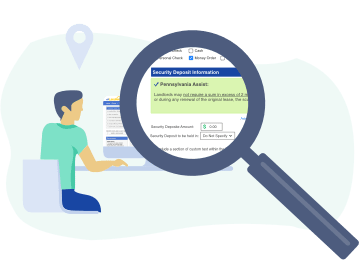
State Assist
Each location has some unique rules and requirements. When you build a Lease Agreement with our Lease Builder Wizard, our ezStateAssist highlights those requirements and tells you everything you need to include to comply with the laws where you rent property.
This means that you don’t have to worry about knowing a bunch of laws. We know them all, and we’ve got you covered.
State Required Text
Some places require that additional text be included in the Lease itself. When you build an ezProLease, that additional text is automatically included.
This means that if your state requires that certain rules or regulations be included, we’ll let you know and our Lease Builder Wizard will automatically include the additional text. Pretty easy, huh?
State Required Documents
Some locations require that additional documents be included with the Lease, for example, a lead-based paint disclosure or an asbestos disclosure. Our Lease Builder Wizard includes over 25 addenda and documents, and we’ll let you know any that are required in your location.
What’s Included in the ezProLease and the Free Lease?
While you’ll get to build both Leases before deciding which one is right for you, we know that you want all the information you can get before making this decision. To help you decide which Lease is right for you, here’s a closer look at exactly what’s included in each.
ezProLease
The ezProLease is our crown jewel and we couldn’t be more proud of it. It gives you a comprehensive, customizable, and State Specific Lease. Not only that, but it includes everything you need to create a complete Lease Package. And perhaps best of all, it’s easy for the Landlord to create. We love it and think you will too. Here are some more details about this gem of a Lease.
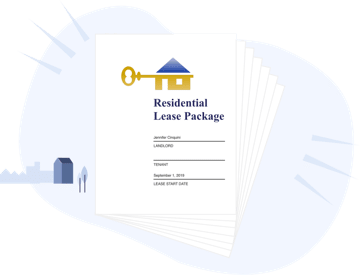
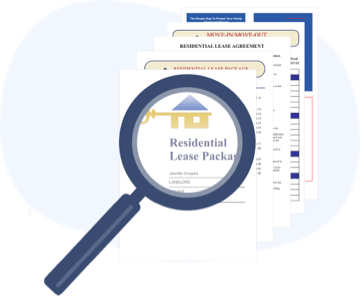
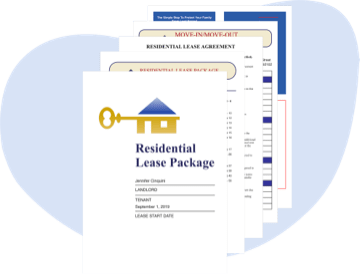
Lease Cover Page
The ezProLease is thorough and detailed, addressing all necessary terms and clearly outlining all roles and responsibilities for both the Landlord and Tenant. It leaves no room for confusion and ensures that Landlords are thoroughly protected before handing over legal possession of their property.
And, all of that punch is packed neatly in your Lease Package, which starts with a Cover Page that helps to keep things organized, professional, and well documented. It sounds like a simple addition, but it’s really important when it comes to being prepared, organized, professional and protected.
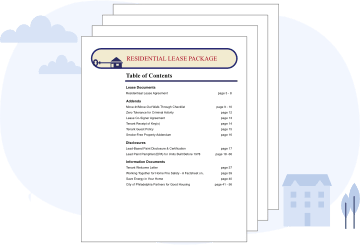
Table of Contents (TOC)
The ezProLease includes a TOC that outlines every section and form included in the Lease.
And the best part is, it’s dynamically created, which means that as you build your Lease and add text, sections, disclosures and documents, the changes are automatically included in your TOC.
This feature isn’t just cool and easy to use, but it also means an added layer of protection, as it ensures a complete and accurate TOC that provides documentation that your Tenant received all pages and parts of the Lease Package.
Basically, it means less work for the Landlord and more protection. What’s not to love?
Lease Document
The ezProLease is written in simple language that both the Landlord and Tenant can easily understand. This might not sound all that important, but it’s one of the most important things Landlords should keep in mind when drafting a Lease.
The Lease not only provides legal protection and documentation, but it’s also there to provide the Landlord and Tenant with guidance about their respective roles. After all, a great Lease clearly outlines exactly who does what and covers any issues relating to the property.
If the Lease is written in legal jargon that neither party really understands, it simply won’t be able to serve this purpose.
To avoid this issue and to ensure that you get the most out of your Lease, our Leases are written in simple and plain language, not legal jargon. They are readable and written in language that leaves no confusion about who does what.
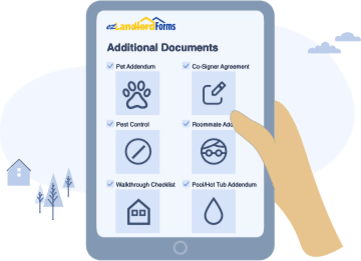
Addenda, Disclosures, & Additional Documents
Our Lease Builder Wizard also lets Landlords select from over 25 addenda and additional documents to include as part of the Lease Package. For example, a Pet Policy, a Lead-Based Paint Disclosure, a Tenant Guest Policy, and a Smoke-Free Property Document.
These additional documents are important for not only ensuring your Lease has all necessary components, but also so you can include everything you need to create the complete Lease Package before Tenants take legal possession of your property.
These additional documents are one more way to establish a strong Landlord and Tenant relationship from day 1 and to make Move-In go as smoothly as possible.
Plus, a complete Lease Package means fewer issues and headaches for the Landlord, which leads to getting the most out of rental property.
Start Your Free Lease
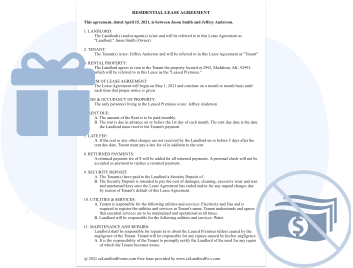
Free Lease
Like our ezProLease, this Lease is created using our Lease Builder Wizard, a user-friendly tool that makes it easy for Landlords to customize their Lease online in minutes. While using our Lease Builder Wizard, the Landlord will get State Assist tips that highlight applicable rules and regulations.
Once the Lease is built online, it’s ready for the Tenant to review and sign. There’s no need for writing in any information or filling in blanks. All details are updated when you build it online.
Unlike some of the residential Lease Agreement templates that our competitors offer, this is a customizable document that a Landlord creates with our Lease Builder Wizard. It offers much more than just a Lease Agreement template.
When it’s completed, simply print the Lease for use. Unlike the ezProLease, this Lease does not include state-specific clauses, addenda, or documents. It also does not give users the option to add custom clauses.
Landlords do not have to pay anything to build it or print it. Zero. Zilch. Nada. Nothing.
Our Leases at a Glance
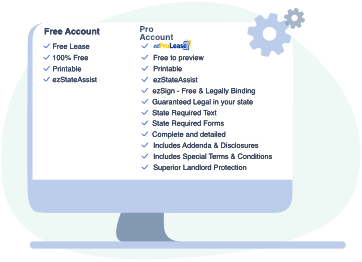
Free Lease
- 100% Free
- Printable
- ezStateAssist
- Free to try & Preview
- Printable
- ezStateAssist
- ezSign
- Guaranteed legal in your state
- Emailable
- Complete and detailed
- Includes Addenda & Documents
- Includes Special Terms and Conditions
- Superior Landlord Protection
When We Say Free, We Mean It
Too often businesses say that a product doesn’t cost anything, but then the reality is that customers have to enter a credit card number or pay some amount. With us, there are no tricks or games.
Our Free Lease is 100% free, no credit card required.
This means that you can create, preview, and print your Lease without paying anything. Think of it as our gift to you.
ezSign
With our ezSign tool, both the Tenant and Landlord may sign documents anywhere with either a computer or mobile device.
This makes the Leasing process so much smoother for the Landlord, as there’s no need for the tedious logistics that often come with getting the Lease signed - printing the Lease, meeting the Tenant for review and signing, scanning the signed document, printing the executed Lease, distributing copies...Yikes, that’s a lot.
Skip all of these steps with ezSign, which makes getting the Lease signed simple, quick and fluid.

- Email the completed Lease to the Tenant
- Tenant and Landlord can review and sign the Lease Agreement online with just a smartphone
- Once the Lease Agreement is signed by both parties, it’s legally binding, all parties receive an executed copy, and it’s automatically stored with ezCloudStorage
In a word, it’s easy.
ezCloudStorage
Once an ezProLease is signed with ezSign, the fully-executed copy is automatically stored with ezCloudStorage. In addition, property and Tenant information, Applicant screening information, and even Lease drafts are saved with ezCloudStorage.
All of this data is securely stored on encrypted servers. And, the data can be accessed anytime from anywhere.
Use of ezCloudStorage is automatically included when you build the ezProLease.
What Should be Included in the Complete Lease Package?
A comprehensive Lease is a good start towards getting the most out of your rental unit, but to really make sure you’re ready to hand over your property and the Tenant is prepared to take possession of the property, you need a full Lease Package.
This includes not only the Lease but also some additional documents. These additional resources are necessary not only to ensure that your Lease complies with all applicable laws, but also to make sure that you’re fully protected and Tenants are fully informed from day 1.
When you build an ezProLease, we’ll automatically include all the documents that are required. Plus, you’ll get the opportunity to select from over 25 additional documents to include in your Lease Package including:
- Pet Policy
- Pest Control Information
- Walkthrough Checklist
- Co-Signer Agreement
- Pool/Hot Tub Policy
- Lead-Based Paint Disclosure
- Tenant Welcome Lette
- Lease Signing Tips
- Zero Tolerance for Criminal Activity
- Tenant Guest Policy
- Tenant Receipt of Keys
- Fireplace & Wood-Burning Stove Addendum
- Fire Safety Fact Sheet
- Energy Saving Fact Sheet
Create a Complete Lease Package Now
What are the Steps of the Leasing Process?
One of the keys to getting the most out of the property you rent is ensuring that you go through all necessary steps of the Leasing process. And, having a written-out system to follow every time you need to Lease a property will make everything go more smoothly and efficiently.
Here’s a step-by-step list to help you do that:
- Show the property to a prospective Tenant
- Have Tenant complete a Rental Application
- Conduct a thorough Tenant Screening Process including a credit report and background check, and talking to references; this is key to ensuring that the Tenant will be able to pay rent and take care of your property
- Draft a customized, comprehensive and state-specific Lease
- Execute the Lease, which means have all parties sign it
- Give a copy of the executed Lease to all Tenants and securely store your own copy
- Do a property walk-through with the Tenant
- Collect first month’s rent and the security deposit
- Hand over the keys and legal possession of the property
Checklist: Are You Ready to Rent Your Property?
Once you give the Tenant keys to your property, they have legal possession of it. This means they have the right to be there and it could take eviction proceedings to get them to leave. This is a big deal, and handing over legal possession is not something that the Landlord should take lightly.
Because of this, it’s important to make sure that you’re fully prepared before you do this. Here’s a quick checklist to go through before the Tenant moves into your rental property:
- Have all occupants completed a Rental Application and Tenant Screening, including a credit report and background check?
- Do you have a fully executed, comprehensive, and State Specific Lease?
- Have you received the entire security deposit and first month’s rent?
- Did the Tenant watch the Move In Video?
Speaking of Checklists...Is there a Lease Signing Checklist I Can Follow?
With lots of things to think through, the Lease signing process can be stressful, especially for a new Landlord. To help make it a little easier, we offer a Lease Signing Checklist.
In addition to that printable checklist, here are some key points to keep in mind as you prepare to execute the Lease and hand over possession of your rental property:
- Confirm that all pages of the Lease Package have been signed by all Tenants and Co-Signers
- Make sure all parties to the Lease have a copy of it once it’s executed
- Place the security deposit funds in an account pursuant to applicable laws
- Walk through the property with the Tenant and document any pre-existing defects
- Securely store the rental application
- Have a system for tracking rent payments, including the first month’s rent
- Confirm that you’ve received the first month’s rent
- Coordinate the transfer of utilities at the property
- Make sure you’ve conducted all mandated inspections and made any mandated disclosures
The Foundation of Being a Great Landlord is a Great Lease
Good relationships between the Landlord and Tenant start with a great Lease that clearly sets expectations for both parties and leaves no confusion about who does what.
One of the best things you can do to make it easy to rent real estate and easy to develop a good relationship with your Tenant is having a great Lease.
A great Lease leads to:
- Better communication
- Fewer conflicts and problems
- A better Landlord experience, with rent paid on time and real estate being taken care of
Avoid the headaches and stresses that too many property owners deal with by laying a strong foundation on day 1. A good Lease makes it as easy as possible to rent your property and to get the most out of it.
Start Your Free Lease
Frequently Asked Questions
What is a Lease?
A Lease is legally-binding contract used when a Landlord, the “lessor,” rents property to a Tenant, the “lessee.” The Lease provides all of the terms under which a property is rented and outlines roles, responsibilities, house rules, and policies. It protects both parties should a dispute arise and provides the framework for dealing with any disputes. It is essential anytime you rent out a property.
If it is a fixed term Lease, it will clearly provide an end date. Most Leases are fixed term and provide a starting and ending date. Even if your Lease is fixed term, it likely will provide the terms under which the Tenant can extend the Lease period.
What is a free lease agreement?
A free lease agreement is a residential lease you create, customize, and print online at no cost. ezLandlordForms lets you build a state-specific rental lease template in the Lease Builder Wizard, then download it as a PDF or eSign, with no credit card required.
What is a residential lease?
A residential lease is a legally binding contract between a landlord and tenant that sets the terms for renting a home. It covers rent, due dates, late fees, security deposit, and the lease term, and it protects both parties if a dispute arises.
What is the Difference between a Lease and a Rental Agreement?
Both are binding landlord-tenant contracts; the difference is duration. A lease is usually long term, often 12 to 24 months, while a rental agreement is short term, often around 30 days. The terms are sometimes used interchangeably.
What should be included in a residential lease agreement?
Core terms include names and contact details, a property description, the lease term, monthly rent and due date, security deposit, late-fee policy, utilities and maintenance, and what happens at the end of the term. State-specific terms and disclosures may also be required.
What is the Difference between a Rental Application and a Rental Agreement?
The rental application and rental agreement are easy to confuse but they serve very different purposes. The rental app is used to help the Landlord screen applicants and select a qualified Tenant. It is not a rental contract and is not a legally-binding document. That said, it’s very important. A Landlord should always screen Applicants before they rent a property. This helps to ensure that the prospective Tenant can pay rent and will be a reliable tenant.
In contrast, a rental agreement creates a contractual relationship between the Landlord and Tenant that defines the terms under which a Tenant rents a property from the Landlord. As discussed, the rental agreement is also an essential document and should be completed before Landlords rent property to a Tenant.
Why do I Need a Lease?
A Lease does a few essential things for both the Landlord and Tenant. First, it outlines each party’s roles and responsibilities as well as any house rules or policies that the Tenant needs to follow. Second, it provides protection for both parties in the event that any conflicts arise. Third, it’s required by some states.
Ultimately, the Lease helps avoid disputes and provides a framework for resolving disputes when they do arise. A Lease is needed any time you rent a property, even if you’re renting to a family member or someone you know. Unfortunately, a handshake won’t help with disputes or protect you in court. Instead, you need a Lease to define the rental terms and policies.
Bottom line: before you rent out any property, you need to execute a Lease. This is key to getting the most out of your real estate.
Why do I need a state-specific lease?
Landlord-tenant requirements vary by state, so a lease should reflect the rules where the property is located. ezStateAssist tips flag state-specific terms and disclosures as you build, helping support compliance. Review local requirements and consult an attorney when needed.
Do you offer leases for every state?
Yes. ezLandlordForms offers state-specific lease agreements for all 50 states and Washington, DC. Select your state to access a lease form aligned with local requirements.
What if a Tenant Violates a Term of the Lease?
If a Tenant violates the Lease, the first thing the Landlord should do is communicate with the Tenant and attempt to resolve the issue. The reality is that sometimes Tenants don’t even realize they’re violating the Lease, so a simple conversation can sometimes resolve the issue.
For example, if a Tenant is consistently late with each month’s rent and doesn’t pay rent by the due date, the Landlord should:
- reach out to the Tenant
- share concerns about the month’s rent and the importance of paying rent on the due date
- remind the Tenant when the month’s rent is due pursuant to the Lease
- discuss late fees associated with rent
- provide any support possible to ensure that the Tenant pays each month’s rent on time.
This initial conversation might solve the problem.
If the Tenant continues to be late with paying rent and continues violating the rental agreement, you might need to consider more drastic actions. In some instances, this means considering the steps needed to terminate the residential rental or residential Lease Agreement.
A good place to start is often a eviction warning and, potentially, initiate eviction proceedings.
Can I download or eSign the lease?
Yes. After you build your lease in the Lease Builder Wizard, you can download it as a PDF or send it for online signature with ezSign, where both landlord and tenant can sign from a computer or mobile device.
What do I do with a Signed Lease?
It’s important to safely store your fully executed, or signed, Lease. An executed copy should be given to all Tenants and the Landlord should store the Lease Agreement to have on file in the event that any issues arise.
What does Governing Law mean?
When you hear governing law in the context of a Lease, it means the laws that apply to the Lease. A residential Lease is governed by the state laws where the rental property is located. Should any conflicts arise, the parties would be in the jurisdiction of the state courts where the property sits. For example, if you live in New York but have a rental unit in Florida, Florida law would be the governing law. This means that when the Lease is drafted, it needs to comply with all of Florida’s applicable laws.
What are the Main Responsibilities of Landlords?
The specific responsibilities of Landlords will be laid out in the Lease. That said, every Landlord has a responsibility to Tenants to maintain a warranty of habitability, which means that the property meets basic safety and living standards This is an inherent right afforded to all Tenants in the United States regardless of the language of the Lease. This means that as a baseline, Landlords are responsible for keeping up with safety codes and ensuring that the property they rent is livable and safe for occupants.
Beyond this inherent right, other obligations will be specifically outlined in the Lease Agreement and usually include dealing with property maintenance, property management, addressing issues caused by normal wear and tear, and making property repairs.
In addition, Landlords are responsible for keeping up with financial obligations including paying property insurance, taxes and, if applicable, the mortgage.
What is an Option to Purchase and When Should I Include it in my Lease Agreement?
A Lease Agreement with an Option to Purchase is simply a Lease Agreement that includes an option for the Tenant to purchase the rental property during the Lease period. It contains all of the same terms as a typical residential Lease Agreement, but in addition, it also includes an offer from the Landlord for the Tenant to purchase the residential rental property before the end of the Lease. For a Landlord that is open to or interested in selling the property they rent, this can be a good term to include.
And, it’s important to note, that even if your current residential Lease Agreement doesn’t include this option, you can always add an option to purchase the property with a Commercial Lease Agreement to learn more.
Is the ezLandlordForms lease really free?
Yes. The Free Lease is a simple, customizable residential lease you can build, preview, and print at no cost, with no credit card required. A Pro version with state-specific clauses, addenda, and eSign is also available.
Free Resources
Related Forms
Related Articles
- What Your Lease Package Should Include Besides a State-Specific Lease
- The Benefits of ezSignatures for Leases
- Why You Need a Strong Lease
- Increase Your Efficiency During Lease Agreement Move-In and Move-Outs
- Rental Lease Agreement: the Essential Tool for the Pro Landlord
- Helpful Video Resources for Landlords
Ready to Be a Great Landlord?
You have a lot invested in your rental property. To make sure that you get the most out of it, it’s important to also invest in a great Lease. Doing so will make sure that you’re protected once you hand over legal possession of your property and that you’ve laid a strong foundation for a good Landlord Tenant relationship.
Set yourself up for success by creating a great Lease today or by taking advantage of our over 200 free forms.